
It’s the day after Global Running Day. Yesterday I sat here, phone in hand, staring at a blank screen as I tried to find the right words, but only coming up short. Frustrated, I put my phone down and went to bed, hoping that by morning I might be able to compose my thoughts. This evening, I sat down on the couch, somehow knowing exactly what I wanted to say. If not for the fact that it was Global Running Day, this ended up being extremely cathartic, as I think I have been holding onto these feelings for a long, long time.
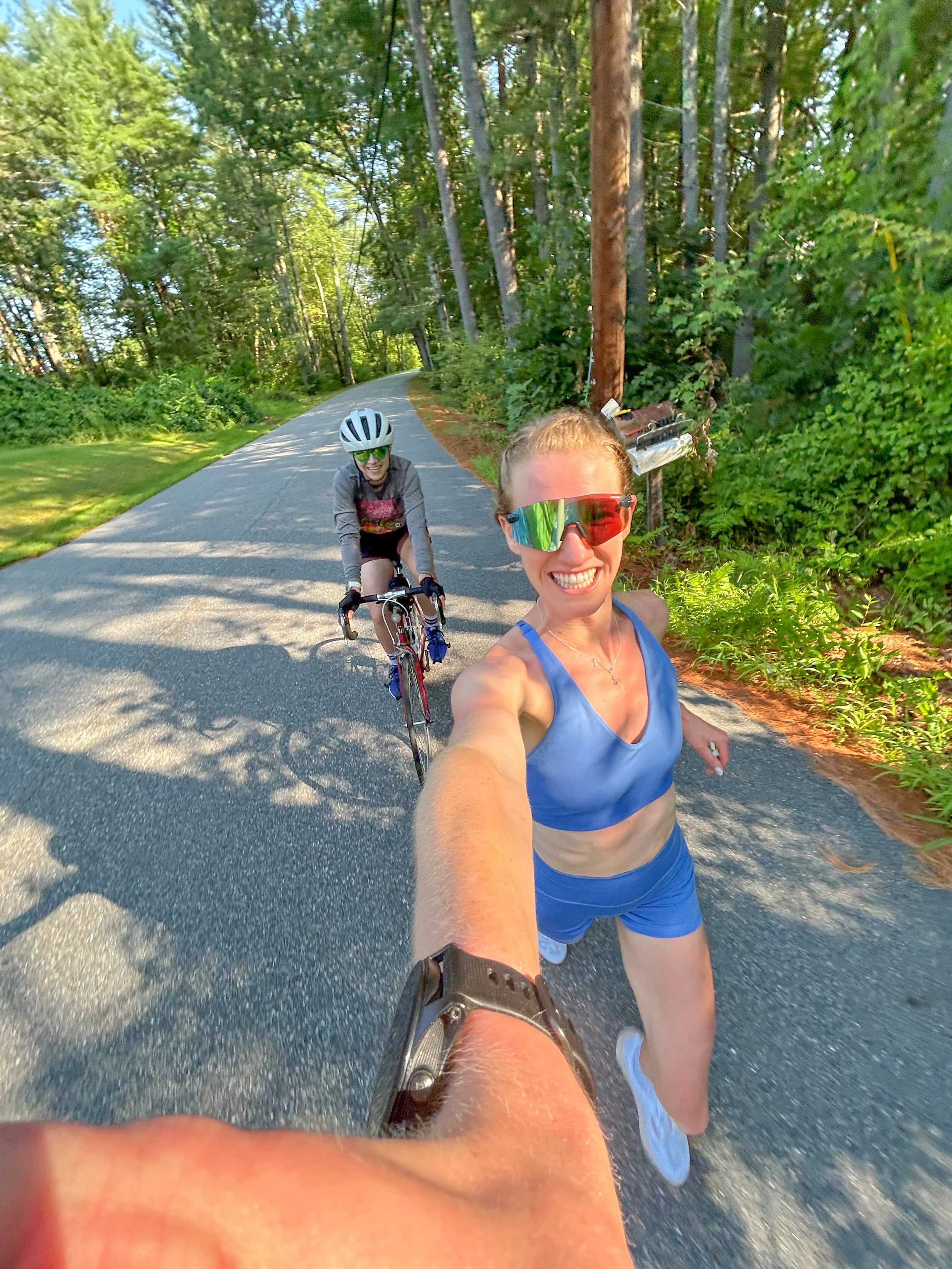
Running has brought me my highest highs, but also my lowest lows. It has given me my greatest friends, taken me to incredible places, allowed me to chase indescribable highs, and taught me that I am more resilient than I would ever otherwise let myself believe. Running has always been, as I am sure many others will agree, a safe space. It was the first space I found a semblance of confidence, the first space I ever learned to believe in myself, and the space that made me feel like anything was possible.
Albeit my historically tumultuous relationship with running, this Global Running Day feels a little more bittersweet than those past. Two years ago, I had finally recovered from myocarditis (for the second time 🥲), had my ankle completely reconstructed, and was well beyond beating my eating disorder. On a whim, I decided to sign up for my first marathon, despite the five year hiatus from running I had taken after high school. Despite my many desperate attempts to return to the sport throughout that period, the timing just hadn’t been right. I felt in my gut that this time was different, figuring that I had gotten over the worst of my health struggles, and firmly believed that brighter days were on the horizon.
One year ago, my training felt like it was finally starting to fall into place after a few blips (a knee dislocation, chronic stomach infection, and chronic allergic reactions…so fun!). I felt hopeful that I would actually be able to make it to the start line of the Chicago Marathon, my dream World Major. Thankfully, I did, and it was one of the greatest experiences of my life, but it wasn’t without trials and tribulations. In September of 2025, about three weeks before the race, I felt a sharp, burning pain in my lower back following my final long run of the training block. I tried to convince myself it was nothing, but it was unlike any pain I had ever experienced. A crawling sensation originating in the lumbar region of my back seemed to spiral up my spine, sending a searing pain bidirectionally from my shoulder blades to my toes. Instead of pulling the plug, trusting a few professional opinions believing that it was nothing serious (it was not an injury caused by trauma, so truly they were in good judgement), I decided to race anyway.
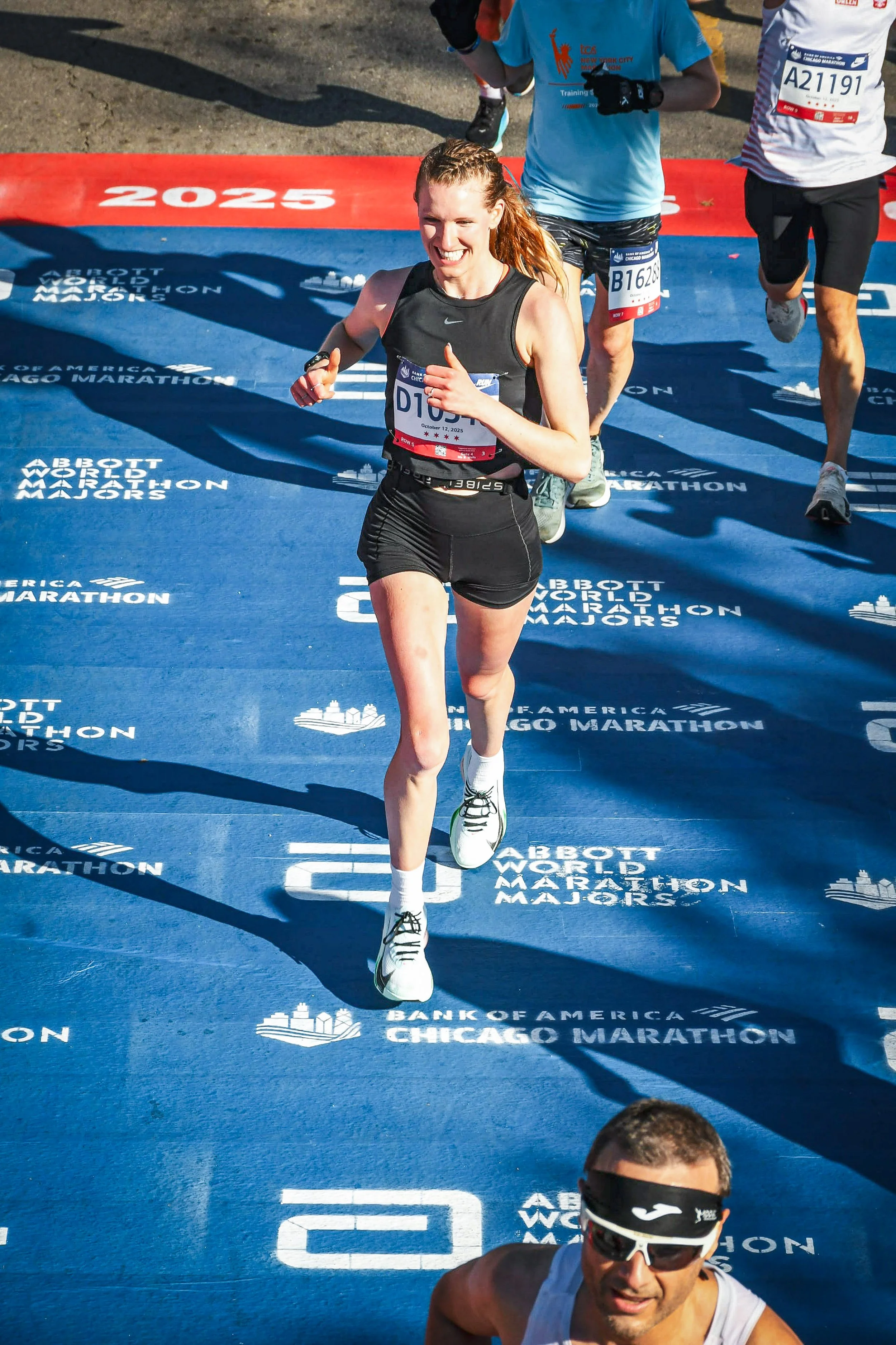
In many ways, the decision was the right one. I spent an incredible weekend with my fiancée, raced with some amazing new friends, and ran the race I had hoped for, despite the constant clunking and grinding in my back reminding me that something was awry. I achieved my dream of breaking 3, the exhilaration I felt crossing the finish line offering me a moment of reprieve from the fear I felt every time I felt movement in my lower back. I figured two weeks off or so post-race would allow for any inflammation to quell, and that I would be back at it in no time. Instead, the pain began to intensify, spreading further afield from it’s centralized position in my lower back to my neck and legs, prompting a little trip to the ER.
About a month after the race, an MRI revealed an injury I wasn’t anticipating—a chronic, bilateral, non-union pars defect, degenerated discs, and spondylolisthesis. Essentially, one of my vertebrae had fractured and slipped over the one below it—and it wasn’t going to heal back together. This sort of injury is more common in sports like gymnastics, weightlifting, and dancing, all of which demand extensive extension of the back. It’s not as common in running. Chronic, non-union fractures are more often congenital, presenting later in life when the vertebrae begins to slip, due to repetitive stress over time. Right now, that idea is a little discouraging, feeling like there’s no one out there that I can relate to. No matter how many ways I type ‘spondylolisthesis’ into social media search bars, I cannot find anyone who has dealt with the same injury and made the return to racing. It’s hard to find other runners out there with the same injury, period.
Every injury I have ever had has been fixable. With time. With rest. With rehab. Even though it’s been seven months, I still cannot wrap my head around the fact that this one is permanent. I am too young for surgery, and I can’t help but wonder if I will spend every day in the same degree of pain, without knowing when I will finally be a surgical candidate. I can’t help but think about the life that existed before, when I could say yes to a spontaneous ten mile run or plan out a training block for my next race. The life where I believed I had finally conquered my health struggles, and earned running back after recovering from my eating disorder. I am so unbelievably grateful to be running again (I have the world’s greatest physical therapist!), but it stings knowing that this little genetic defect was existing in my body without my knowing, and for so many years. Sometimes I wonder if there was anything I could have done to prevent it, although the general consensus seems to be that the slippage was imminent.
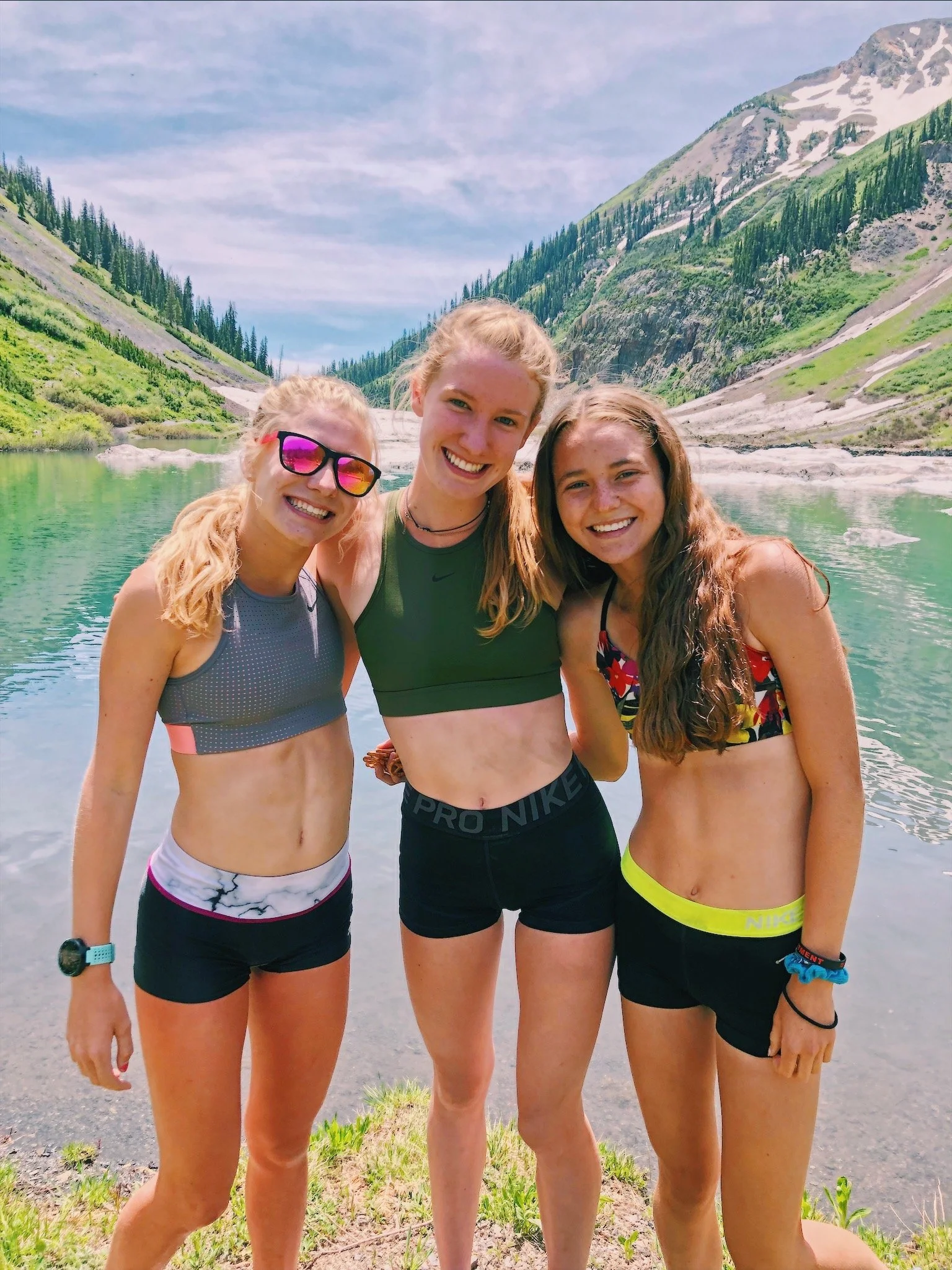
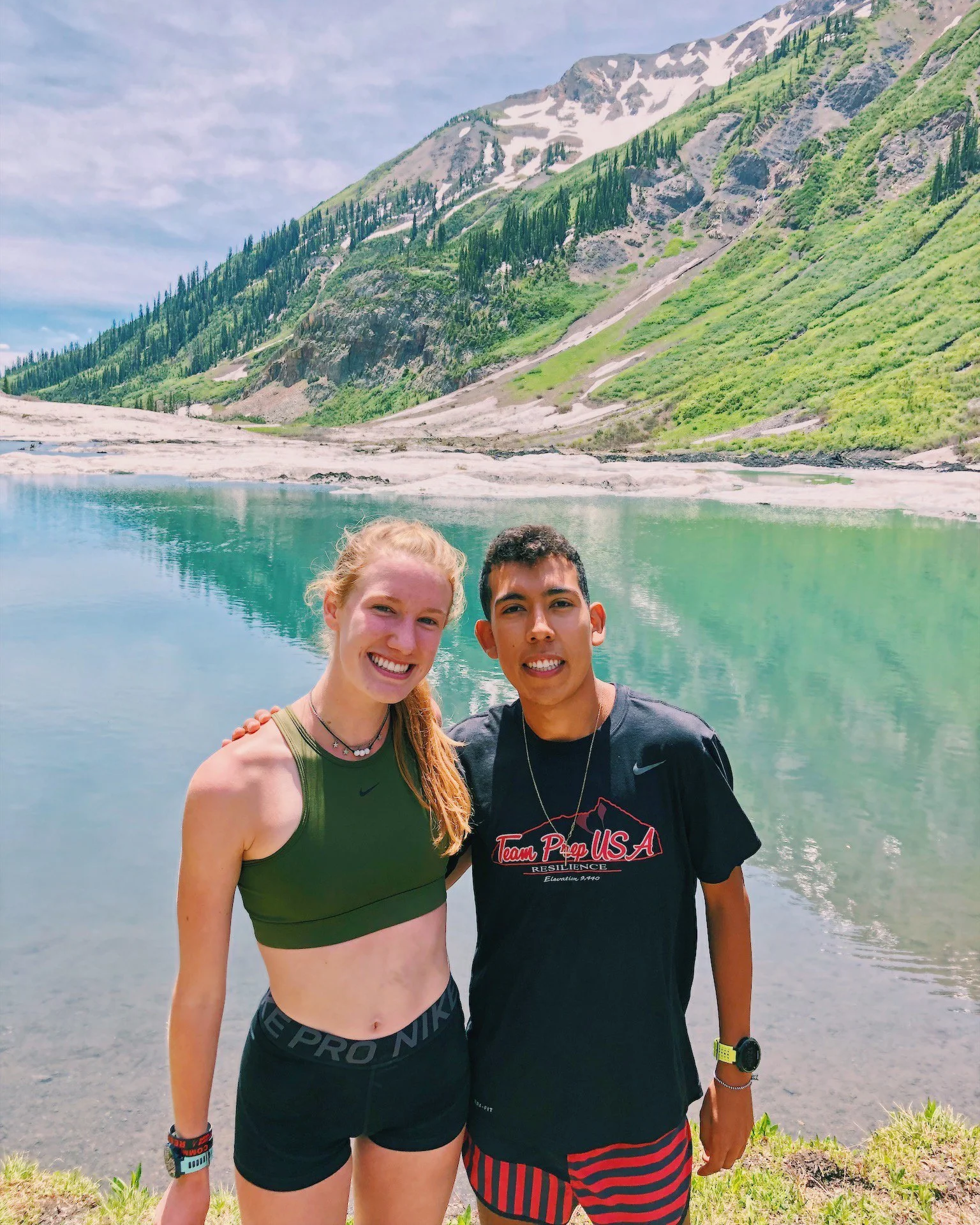
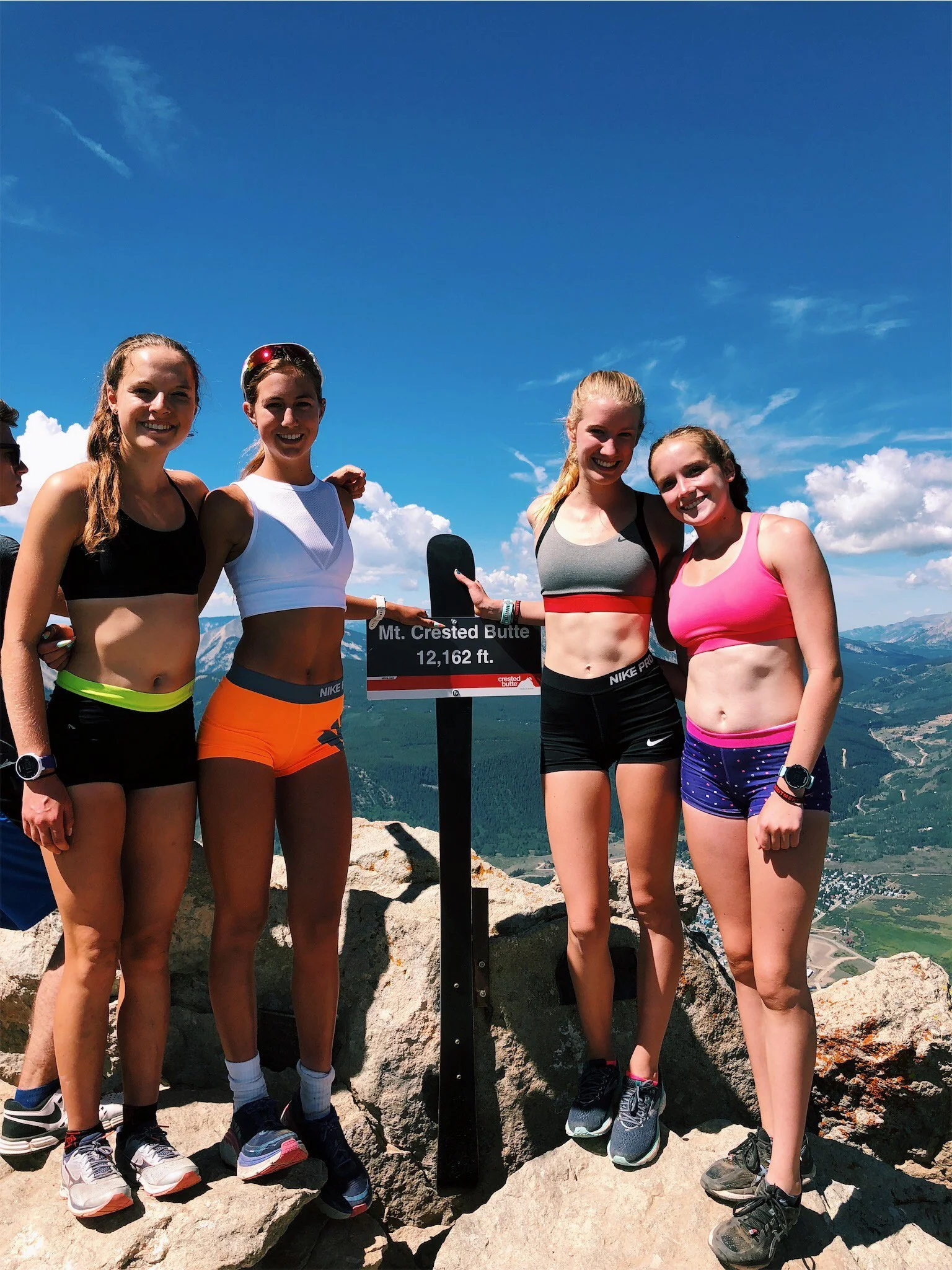
I cannot stop myself from thinking about the girl that spent her summers in Colorado, dreaming of everything her life would be in her twenties. I think of the version of myself less than a year ago, excited about what was next after crossing the Chicago Marathon finish line. I want to keep showing up for both of them, and every version in between. I hope that if one day I can’t run anymore, then maybe I will be able to show up for other young athletes, in all the ways I wish I showed up for myself. But mostly, I hope to be a success story, so that other distance runners receiving a chronic spondylolisthesis diagnoses have a path forward, and the belief that their story isn’t over.

As much as I want to say that I wish things were different, I firmly believe that something good always comes from the darkest of hours. And as hard as this chapter might be, it will never tell the full story. I am so grateful for the friendships that running has allowed me to build, the quiet mornings I have spent on the roads with my partner, the post-race hugs from my parents, the post long-run coffee dates, and the job I am so blessed to work, immersed in the running community. I am so grateful for the places I have traveled, the peaks I have summited, and the finish lines I have crossed, as it all truly has been the adventure of a lifetime, a million times over. Although things might look a bit different now, I trust that this is just a new kind of finish line to cross. No matter what my future in running looks like, I am so grateful for my journey in this sport, and truly believe that it’s not over. I hope that maybe, just maybe, this might help someone else believe that, too.